The Moment That Changes Everything
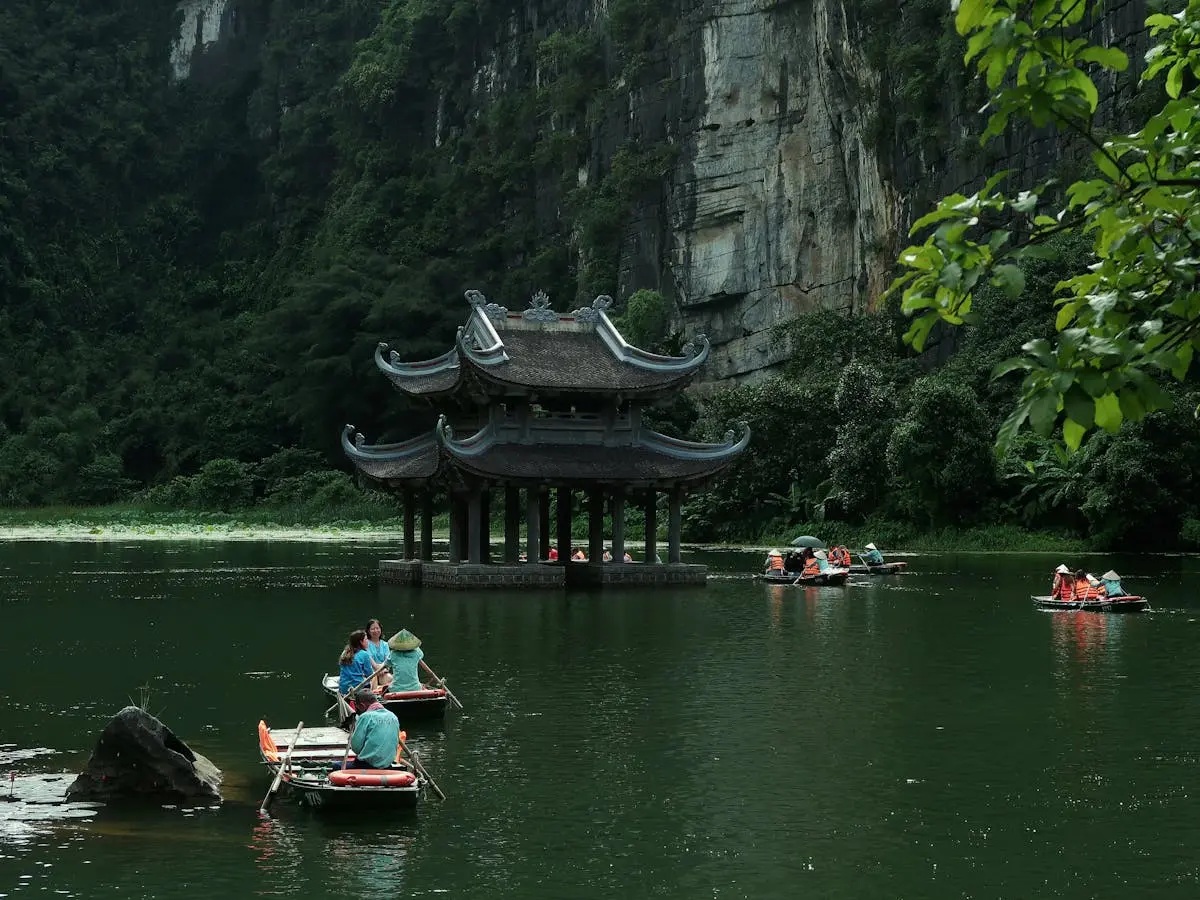
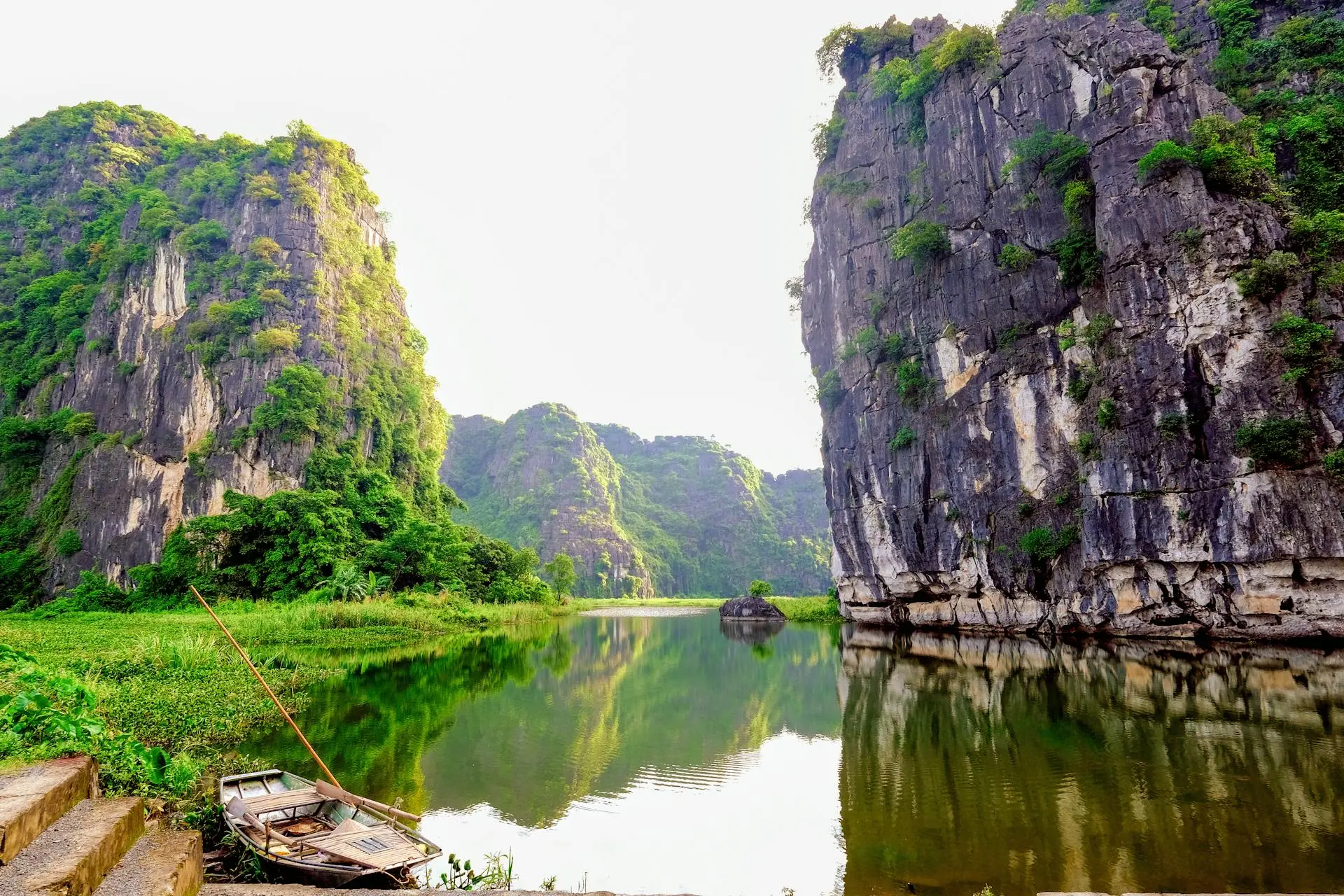
Imagine this. You have climbed 500 steps to the summit of Hang Mua. The entire Tam Coc valley spreads below you — rice paddies, karst towers, a silver river winding toward the horizon. The late afternoon light is catching the limestone faces at the perfect angle, and you want to stay. You want to sit on the dragon lookout and watch the shadows lengthen across the valley. You want to wait for the light to shift one more time before you descend.
On a group tour, you cannot. The bus is waiting. Thirty-five other people are already descending the stairs, and the guide is waving from the base. You have 5 minutes. On a private tour, your guide says: "Take your time. I will be at the cafe at the bottom whenever you are ready."
That is the difference. Not luxury for its own sake. Not premium pricing for premium branding. The fundamental, practical ability to respond to the experience as it unfolds — to let the destination set the agenda rather than a bus schedule.
I have taken group tours on three continents. They are efficient at showing you things. A private tour is efficient at letting you experience them.
Your Pace: Freedom to Follow Your Curiosity
A group tour visits destinations in a fixed sequence for a fixed duration. The schedule is designed for the average traveler and cannot accommodate the historian who wants to spend an hour at Hoa Lu asking questions about the Dinh Dynasty, the photographer who needs 20 minutes at a specific viewpoint for the right light, or the family with young children who need an unscheduled ice cream break and a slower pace on the stairs.
On a private tour, the pace is entirely yours. Consider the scenarios:
The viewpoint moment. You reach the summit of Hang Mua and the view stops you cold. On a private tour, you stay as long as you want. Your guide points out features you would miss on your own — the exact path of the river through the three caves, the distant outline of Bai Dinh Pagoda, the village where your lunch restaurant is located.
The unexpected discovery. Between attractions, your car passes a roadside market, a craftsman shaping stone, or a viewpoint that is not on any itinerary. Your guide says: "Would you like to stop?" You pull over for 10 minutes. These unplanned moments often become the most memorable part of the day.
The skip option. You arrive at a temple and realize it is not really your thing. No problem — your guide suggests an alternative, or you move to the next stop with the time you have saved. On a group tour, you wait for everyone else to finish regardless of your own interest level.
The weather pivot. An afternoon thunderstorm rolls in. Your guide rearranges the remaining itinerary — visiting a cave or pagoda (sheltered) during the rain, and saving the outdoor viewpoint for when it clears. On a group tour, the schedule does not change and you visit the viewpoint in the rain.
Your Guide: A Companion, Not a Loudspeaker
On a group tour, the guide addresses 30-40 people simultaneously. They speak through a microphone or a headset system, delivering a standardized script that covers the broadest possible range of interests at the shallowest possible depth. Questions from individual travelers are difficult to accommodate. Personal interests — in history, geology, Buddhism, photography — cannot shape the commentary because the guide must serve the entire group.
On a private tour, your guide speaks to you. Not at you. Not through a microphone at a crowd. To you. The conversation is two-way: you ask questions, your guide answers; your guide shares a local story, you respond with your own observations. If you are interested in Vietnamese history, the guide expands on the dynastic narratives at Hoa Lu. If you are interested in geology, the conversation shifts to karst formation processes. If you just want to enjoy the scenery in quiet, the guide reads that too and gives you space.
Our guides are locals from the Hoa Lu (formerly Ninh Binh) region. They did not learn about the landscape from a training manual — they grew up in it. They know which viewpoints offer the best light at which time of day. They know the back entrance to a temple that avoids the tour bus crowds. They know the restaurant where the com chay (burnt rice) is made by a grandmother who has been perfecting the technique for 50 years. This kind of intimate local knowledge does not fit into a group tour script, but it flows naturally in a private conversation.
Your Comfort: The Journey as Part of the Experience
The drive from Hanoi to Hoa Lu takes approximately two hours. On a group tour, that drive happens in a bus — shared with strangers, following a pick-up circuit around multiple Hanoi hotels that can add 30-60 minutes to the journey. The bus drops you at each attraction and you walk to the entrance with the rest of the group.
On a private tour, your driver picks you up at your hotel door. Your vehicle is a private car (Essentials), private SUV (Panorama), or luxury SUV (Odyssey) with air conditioning, cold water, and phone charging. The drive south becomes an introduction to the journey — your guide explains the landscape as the flat Red River Delta gives way to the first karst formations, and by the time you arrive at the first attraction, you have context for what you are about to see.
Between stops, the car is your mobile base. Leave bags in the vehicle. Keep water and sunscreen accessible. Rest in air-conditioned comfort between climbs. If you need a bathroom break, a pharmacy stop, or a SIM card, your driver handles it without disrupting the group schedule — because there is no group schedule.
The Real Scenarios
Private touring is not an abstract luxury. It solves real problems that group tours create:
Traveling with children. Kids need bathroom breaks, snack stops, and shorter attention spans at temples. A private tour adjusts. A group tour does not.
Traveling with elderly parents. The 500 steps at Hang Mua may not be feasible. A private tour substitutes an alternative activity. A group tour leaves them waiting at the base.
Serious photography. The best light at Tam Coc and Hang Mua comes in early morning and late afternoon. A private tour can be timed to maximize these windows. A group tour arrives whenever the bus gets there.
Dietary requirements. Vegetarian, vegan, gluten-free, allergies — a private tour arranges meals around your needs. Group tour lunch is one set menu for everyone.
Romantic trip. A couple celebrating an anniversary or honeymoon does not want to share a bus with 35 strangers. A private tour creates an intimate, personal experience.
Introvert comfort. Not everyone thrives in group settings. A private tour eliminates the social obligation of a shared experience and lets you engage with the destination on your own terms.
We stopped at a village market that was not on the itinerary. Our guide bought fresh mangoes and we ate them watching the river. That was the moment I will remember.
The Cost in Perspective
A group tour from Hanoi costs $35-50 per person. Our private tours cost $99-149 per person. The premium is $50-100 — and that amount includes upgrades that are impossible to replicate on a group tour:
A private vehicle instead of a shared bus. A dedicated guide instead of a microphone. A quality meal instead of a tourist canteen lunch. A private boat instead of a shared one. Direct hotel pick-up instead of a 45-minute collection circuit. And the single most valuable commodity in travel: the freedom to let the destination unfold at your pace.
For a couple, the total additional cost is approximately $100-200 for the day. For a family of four, it is $200-400 total. In the context of an international trip to Vietnam — flights, hotels, meals, other activities — this is a modest premium for what is likely to be one of the most memorable days of your journey.
For a detailed comparison of what each tour includes, see our private vs group tours guide.