A Landscape That Defies Description
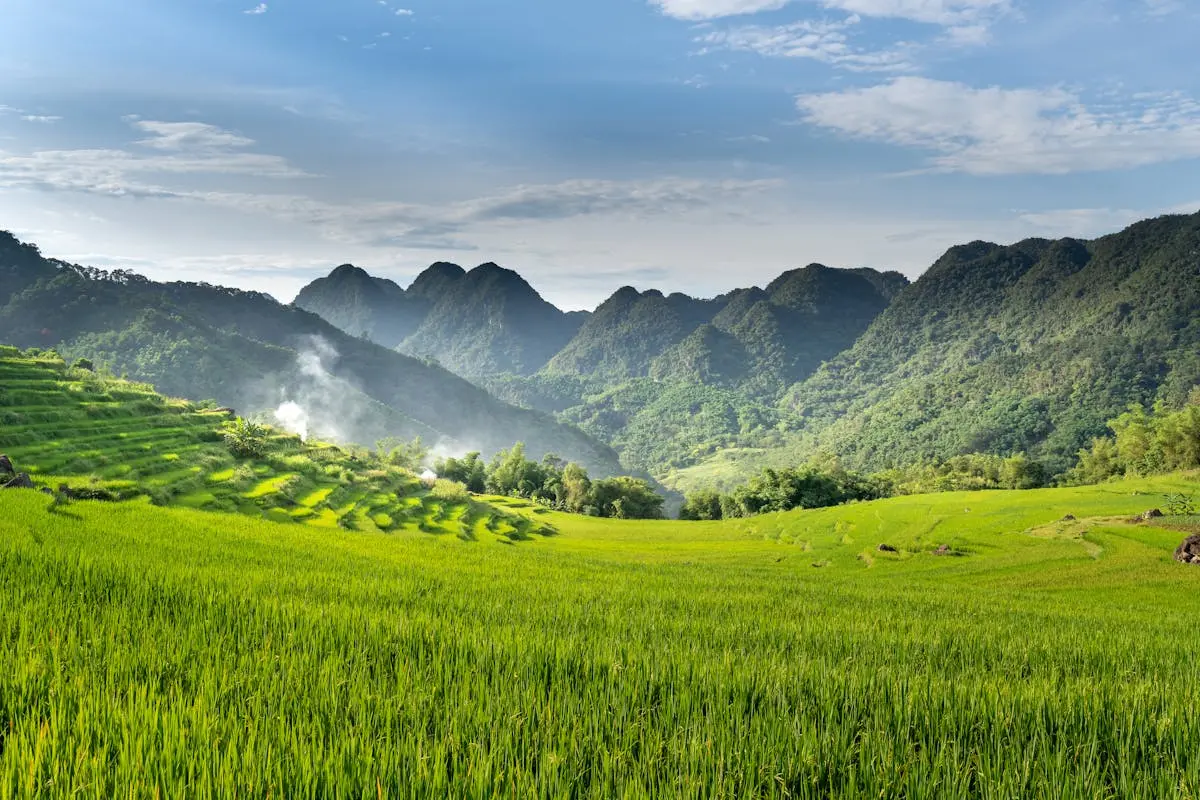
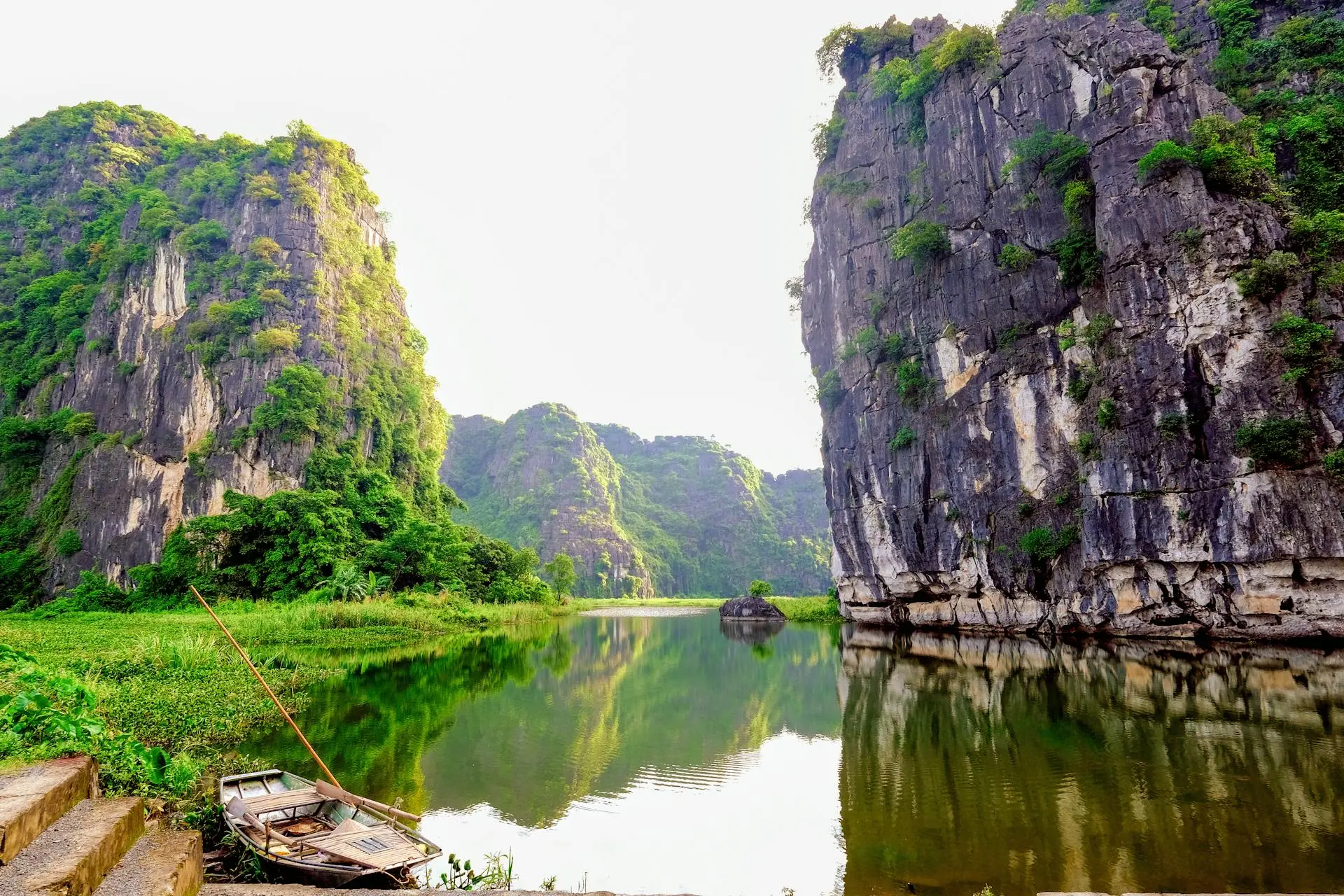
Ninety kilometres south of Hanoi, the Red River Delta gives way to something ancient and improbable. Limestone towers rise vertically from still water, their flanks draped in vegetation that has taken root over millennia. Between these peaks, rivers and streams carve pathways through caves that open into hidden lagoons, each one more quietly astonishing than the last. This is Trang An, and nothing in Vietnam quite prepares you for it.
The Trang An Landscape Complex received UNESCO World Heritage status in 2014 as one of the rare mixed sites — recognized simultaneously for its outstanding natural beauty and its deep cultural significance. The karst formations here began taking shape approximately 250 million years ago during the late Permian period. Archaeological evidence suggests that human habitation in the caves dates back more than 30,000 years, making this one of the longest continuously inhabited landscapes in Southeast Asia.
The Boat Route: 31 Caves and Counting
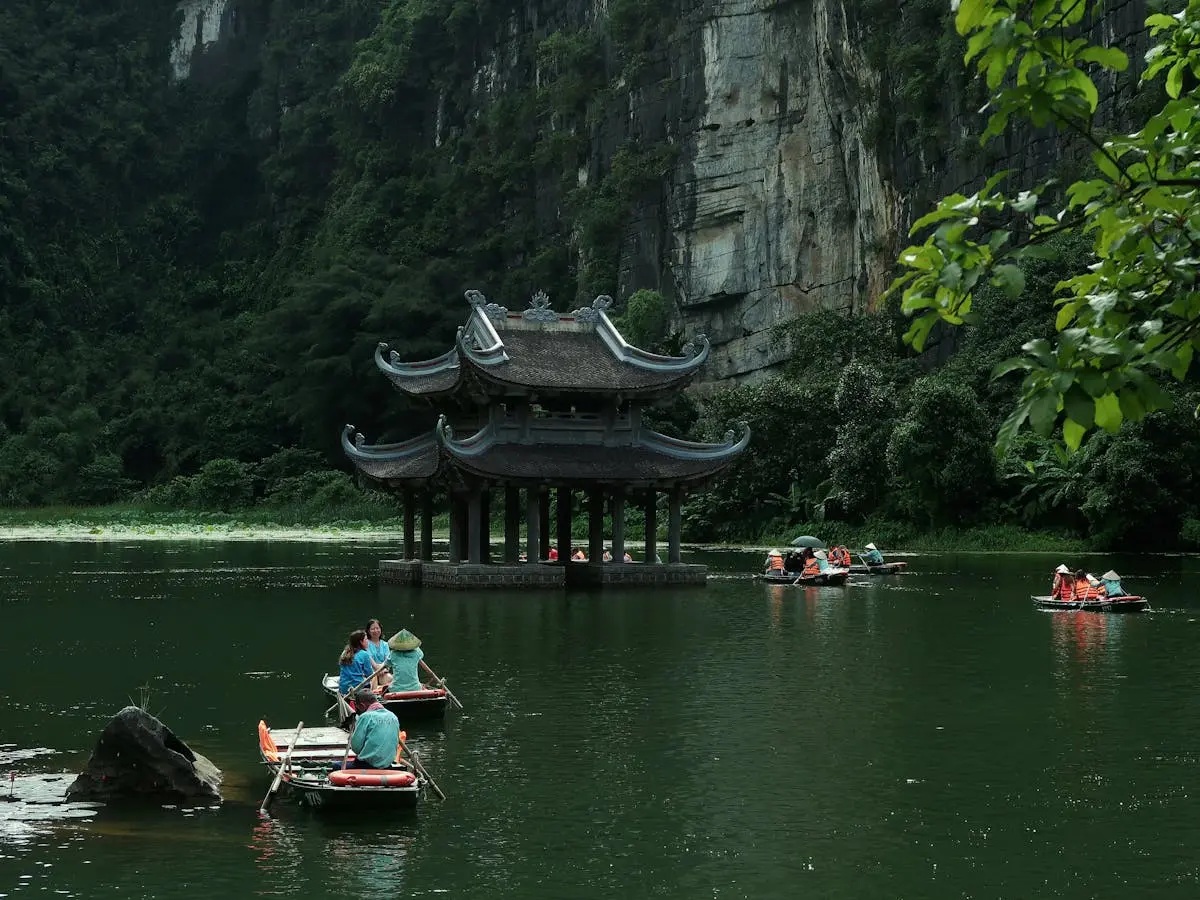
The primary way to experience Trang An is by boat. Three main routes wind through the landscape complex, each offering a different combination of caves, temples, and waterways. The boats — simple, flat-bottomed sampans — are rowed or motored by local boatmen who navigate the narrow cave passages with practiced ease. Some caves require passengers to duck low, the limestone ceiling just overhead; others open into cathedral-sized chambers where the sound of dripping water echoes off walls smoothed by millennia of geological patience.
Route 1 is the most popular, passing through nine caves including Sang Cave, Toi Cave, and Ba Giot Cave, with stops at Trinh Temple and the Vu Lam Royal Palace site. Route 2 traverses slightly different territory, emphasizing the larger cave systems and offering access to more remote temple sites. Route 3 is the newest, specifically designed to pass through the filming locations of Kong: Skull Island and includes some of the most visually dramatic cave passages. On a private tour, your boatman can adjust pace and stops according to your interests — an advantage unavailable on group circuits.
Cultural Layers: From Prehistoric Caves to Imperial Temples
What elevates Trang An beyond a scenic boat ride is the depth of its human history. Archaeological excavations in the caves have uncovered stone tools, ceramic fragments, and burial sites spanning the Paleolithic through the Neolithic periods. The cave systems served as shelters during periods of rising and falling sea levels, and the stratigraphic record within these caves provides one of the clearest chronologies of human adaptation to climate change anywhere in the region.
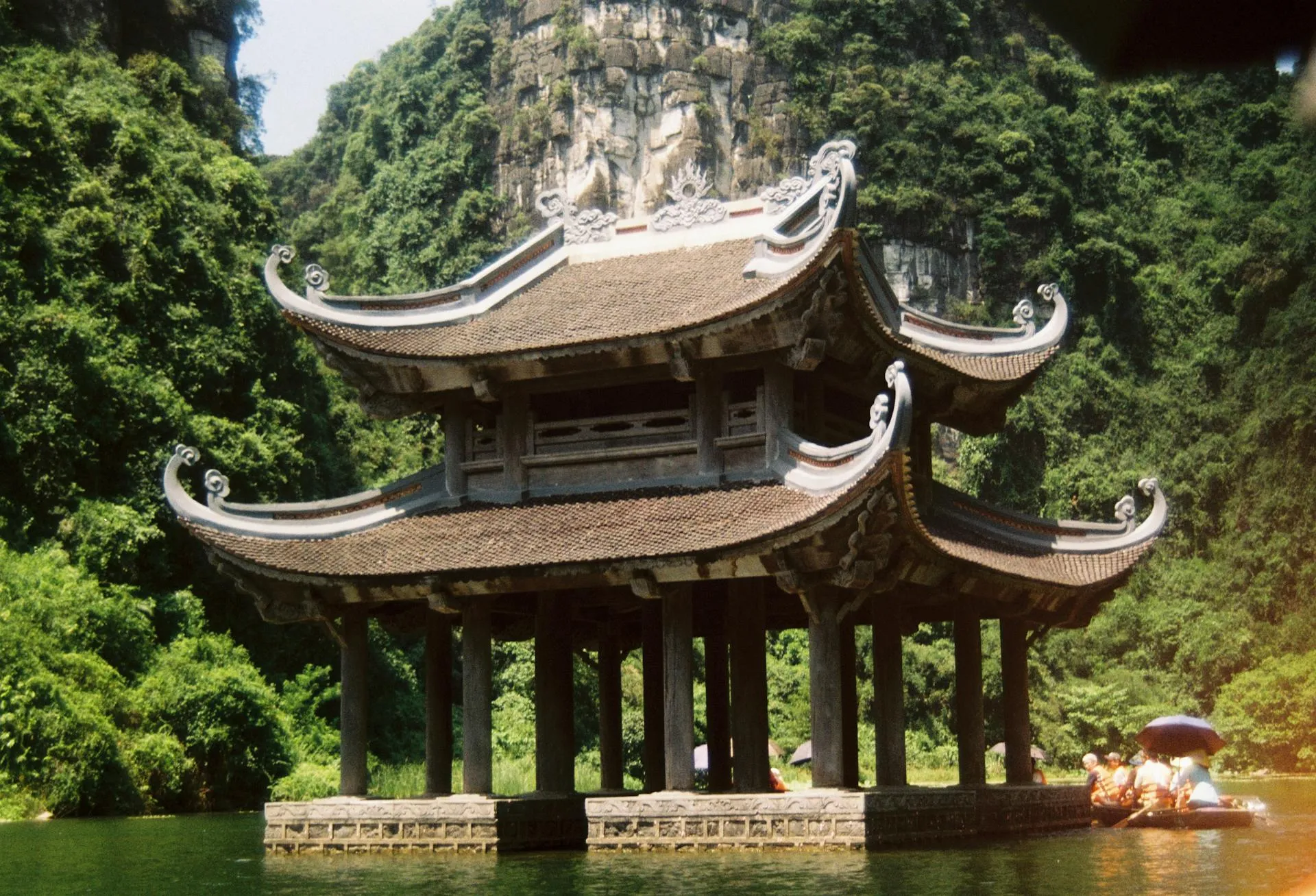
Along the boat routes, several temples punctuate the waterway. Trinh Temple, dedicated to Trinh, a general of the Tran Dynasty, sits at the base of a cliff face and can be reached via a short climb from the dock. The Vu Lam Royal Palace ruins mark the site where the Tran Dynasty retreated during the Mongol invasions of the 13th century — a strategic withdrawal into a landscape that was, quite literally, impenetrable. These are not reconstructed tourist attractions; they are real historical sites embedded in the landscape that necessitated their construction.
The water is glass. The caves are cathedrals. And the silence between them is older than anything you've ever heard.
The Landscape Itself
Trang An's karst topography belongs to what geologists call a tower karst landscape — a formation where isolated limestone towers rise steeply from a surrounding plain, in this case a plain that is periodically or permanently flooded. The result is a labyrinth of peaks, valleys, and water-filled depressions connected by caves and subterranean streams. The total area of the landscape complex covers approximately 6,172 hectares, with a buffer zone extending to over 12,000 hectares.
The biodiversity within the complex is considerable. The forested limestone peaks support over 500 species of vascular plants, including several endemic species found nowhere else. Birdwatchers have recorded over 150 species in the area. The waterways themselves shelter freshwater fish, turtles, and crustaceans adapted to the unique conditions of karst hydrology. During quieter moments on the boat — typically in the early morning or late afternoon — it is not unusual to spot kingfishers, herons, or hawks perched on the cliff faces.
Kong: Skull Island and Global Recognition
In 2016, Hollywood came to Trang An. The production of Kong: Skull Island used several locations within the landscape complex as the primary setting for the film's mythical island. The dramatic karst towers, shrouded in mist and tropical vegetation, required minimal set dressing to become a convincing prehistoric world. The filming brought international attention to the region and led to the creation of a dedicated boat route (Route 3) that passes through the filming locations. A small exhibition near the dock includes behind-the-scenes photographs and production notes.
While the Hollywood connection brings a certain cachet, the real significance of Trang An predates any film by approximately 250 million years. The landscape does not need a movie to be extraordinary. But the production did introduce Hoa Lu (formerly Ninh Binh) to travelers who might otherwise have limited their Vietnam itinerary to Hanoi and Ha Long Bay.
Practical Tips for Visiting Trang An
The boat ride begins at the Trang An Wharf, a well-organized embarkation point with ticket counters, waiting areas, and refreshment stalls. The entrance fee of 250,000 VND (approximately $10 USD) covers both the wharf entry and the boat ride itself. Each boat accommodates four to five passengers, and on a private tour, the boat is exclusively yours.
Timing matters. The best light for photography arrives in the early morning (before 9:30 AM) and the late afternoon (after 3:00 PM), when the sun angles create dramatic shadows across the cliff faces and the water takes on a deep emerald hue. Midday visits are perfectly fine but tend to be busier and hotter between April and September. If you have the flexibility, request an early departure from Hanoi — arriving at Trang An before the group tour buses changes the experience fundamentally.
Wear comfortable clothing that you do not mind getting slightly damp. The cave passages occasionally require ducking, and some water may splash over the gunwales. Bring sunscreen, a hat, and insect repellent. A waterproof phone case is worthwhile insurance. Temple stops along the route may require removing shoes, so slip-on footwear is practical. Most importantly, bring patience. Trang An rewards those who settle into its rhythm rather than rushing through it.
How to Visit Trang An on a Private Tour
Two of our private day tours from Hanoi include Trang An as a centerpiece. The Ninh Binh Panorama ($119/person) combines Trang An with Hang Mua Cave, cycling through villages, and a gourmet lunch featuring local Ninh Binh specialties. The Ninh Binh Odyssey ($149/person) is our premium experience, offering a choice between Trang An and Van Long Wetlands, combined with Hoa Lu Ancient Capital, a curated lunch, and sunset cocktails.
Both tours include private round-trip transportation from your Hanoi hotel, an English-speaking guide, all entrance fees, and a dedicated boat. The difference between a private visit and a group tour visit is not subtle. On a private tour, you arrive on your schedule, your boatman adjusts to your pace, and your guide provides context specific to what you are seeing rather than reciting a memorized script. If a particular cave or temple captivates you, you stay. If the light is perfect, you stop. That flexibility is the entire point.