Two Pagodas, Two Philosophies
The Hoa Lu (formerly Ninh Binh) region holds two pagoda experiences that could not be more different in character, yet together they define the spiritual landscape of this extraordinary area. Bai Dinh Pagoda is monumental — Vietnam's largest temple complex, with architecture designed to overwhelm in scale and ambition. Bich Dong Pagoda is its quiet opposite — a small, ancient pagoda built into a limestone cliff, where the architecture defers to the mountain and the atmosphere is one of contemplation rather than spectacle.
Understanding both pagodas enriches a visit to the region, because they represent two enduring approaches to Buddhist practice in Vietnam: the grand institutional tradition and the intimate mountain hermitage tradition. Whether you visit one or both depends on your interests, your schedule, and what you hope to take away from the experience.
Bai Dinh Pagoda: Scale as Devotion
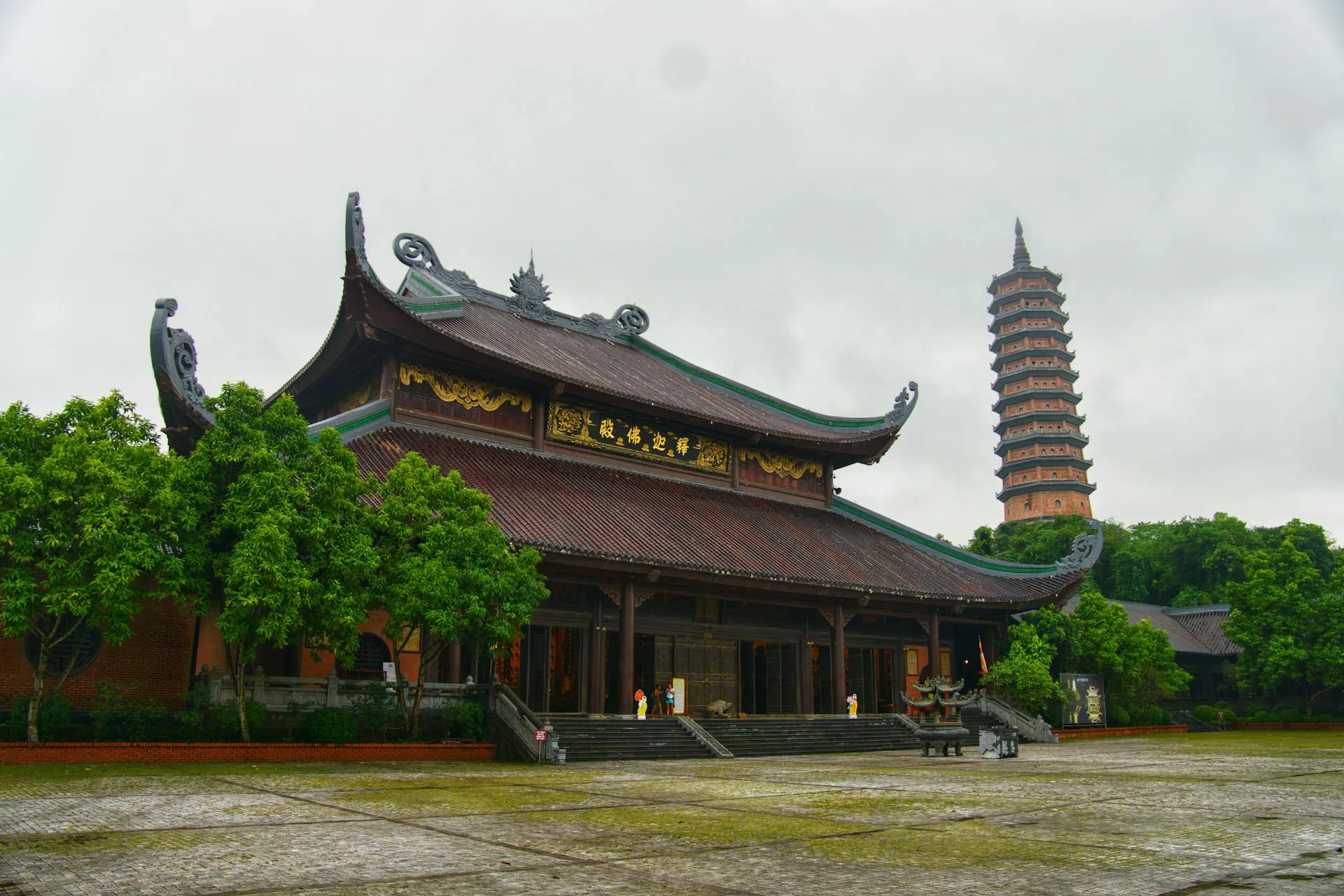
Bai Dinh Pagoda was built between 2003 and 2010 as part of a national cultural project to create a Buddhist centre of significance in the north. The numbers are staggering: the complex covers 700 hectares including the surrounding protected landscape; the new pagoda section alone occupies 80 hectares. The main hall houses a 100-tonne bronze Sakyamuni Buddha — the largest in Vietnam. A corridor of 500 stone-carved Arhat statues, each one individually sculpted, lines the walkways between halls. The bell tower holds a 36-tonne bronze bell, the largest in the country.
The approach to Bai Dinh is itself an experience. Electric carts transport visitors from the entrance gate along a tree-lined avenue to the base of the temple complex. From there, broad stone staircases ascend through successive halls, each one larger than the last. The Three Gates (Tam Quan) open onto a courtyard that feels deliberately vast — the intention is clearly to diminish the individual visitor in relation to the sacred architecture, a technique common in Buddhist temple design across East and Southeast Asia.
The main halls include the Phap Chu Hall (housing the bronze Sakyamuni Buddha), the Quan Am Hall (dedicated to the Bodhisattva of Compassion), and the Tam The Hall (Three Buddhas of Past, Present, and Future). Each hall is constructed in the Vietnamese traditional style with heavy tiled roofs, carved wooden pillars, and elaborate altar arrangements. The incense smoke, the sound of bells and chanting from recorded dharma talks, and the sheer scale of the spaces create an immersive environment regardless of the visitor's personal religious perspective.
The Ancient Bai Dinh: Where the Complex Began
Above and behind the new pagoda complex sits the ancient Bai Dinh (also called the old pagoda), which dates to the Ly Dynasty period (1009-1225 AD). This is the original site — a modest cave temple on the mountainside that served as a meditation retreat for monks long before the massive modern complex was conceived. The ancient pagoda includes a cave containing stalactite formations and a small altar, and the climb to reach it is rewarded with views over the surrounding karst landscape and the new pagoda complex below.
The contrast between the ancient and new sections is striking. Where the new complex is polished, symmetrical, and monumental, the ancient pagoda is rough-hewn, organic, and intimate. The cave itself is cool and damp, with the sound of dripping water providing a natural counterpoint to the ceremonial sounds in the halls below. Most group tours skip the ancient pagoda entirely due to time constraints — which is one of several reasons a private tour offers a deeper experience of the site.
Five hundred stone faces, each one different. Walking the corridor is like meeting five hundred teachers, each with something different to say.
Bich Dong Pagoda: The Mountain Hermitage
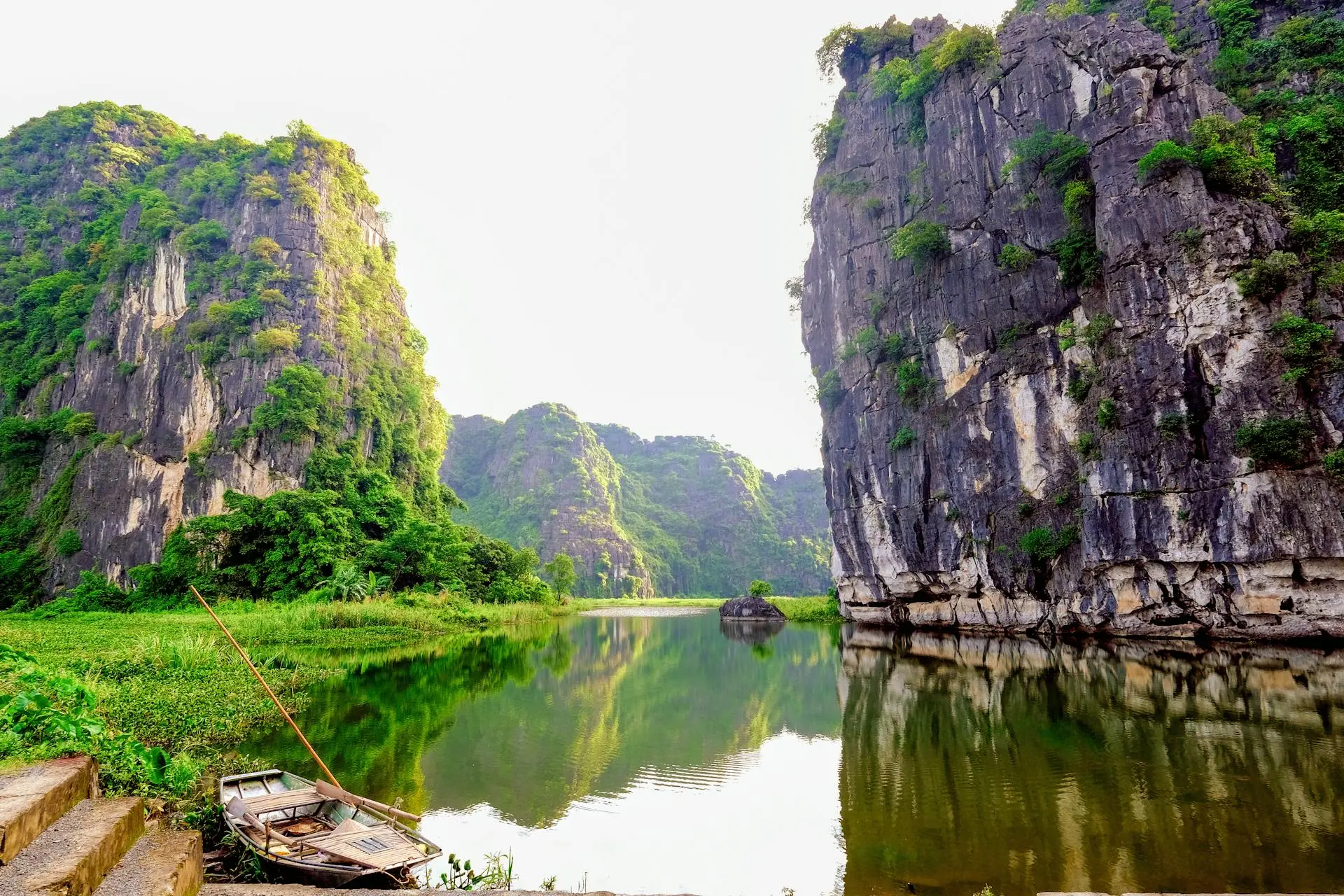
Fifteen kilometres southeast of Bai Dinh, in the Tam Coc area, Bich Dong Pagoda offers an entirely different encounter with Vietnamese Buddhism. Built in 1428 during the Le Dynasty, Bich Dong translates to "Green Pearl Grotto" — a name that becomes immediately legible when you see the pagoda's limestone cliff face draped in tropical vegetation, with temple buildings emerging from the rock as naturally as the plants around them.
Bich Dong consists of three levels: the lower pagoda (Ha Pagoda) at ground level, the middle pagoda (Trung Pagoda) partway up the cliff, and the upper pagoda (Thuong Pagoda) near the summit. The architecture is deliberately modest — small wooden buildings with tiled roofs, set against and into the limestone. Incense smoke drifts through the courtyard of the lower pagoda, where a lotus pond reflects the cliff face above. Stone steps lead upward through the middle pagoda, which incorporates the mouth of a cave into its worship space. The upper pagoda requires climbing through a narrow cave passage to emerge at a lookout point with views over the surrounding rice paddies and karst towers.
The 18th-century poet Nguyen Nghiem reportedly declared Bich Dong the "second most beautiful grotto in Vietnam" (after Huong Tich Cave near Hanoi). Whether or not one agrees with the ranking, the atmosphere at Bich Dong is undeniable. The combination of ancient architecture, living rock, tropical vegetation, and the pervasive quiet creates a space that feels genuinely sacred in a way that transcends any particular religious tradition. It is a place where slowing down is not optional but inevitable.
The Arhat Corridor at Bai Dinh
Of all the features at Bai Dinh, the Arhat corridor is perhaps the most remarkable. Five hundred stone statues of Arhats — enlightened beings in the Buddhist tradition — line the covered walkways that connect the main temple halls. Each statue is approximately 2 metres tall and individually carved from a single block of stone. No two faces are alike; each expresses a different emotion, posture, or gesture.
Walking the corridor is a meditative experience in itself. Some Arhats sit in serene contemplation; others appear to be laughing, arguing, sleeping, or gesturing in animated conversation. The sculptors drew from a long tradition of Arhat depiction in East Asian Buddhist art, but the individual character of each figure suggests a creative freedom that goes beyond rote reproduction. In Buddhist cosmology, the 500 Arhats represent the first disciples of the Buddha to achieve enlightenment — and their diversity in the corridor reflects the Buddhist teaching that enlightenment manifests differently in each individual.
Practical Tips for Visiting
Bai Dinh: Entrance to the pagoda complex is free, though electric carts from the entrance gate to the temple base cost 30,000 VND one way (approximately $1.20 USD). The complex is large enough that comfortable walking shoes are essential. Modest dress is expected — shoulders and knees covered. The site is busiest during spring festivals (February-March) and Vietnamese public holidays. On ordinary weekdays, particularly in the afternoon, the complex can feel almost deserted despite its size.
Bich Dong: The entrance fee is minimal (10,000 VND). The climb to the upper pagoda involves steep stone steps and a cave passage — not difficult, but not suitable for those with significant mobility limitations. The site receives far fewer visitors than the Tam Coc boat ride or Hang Mua, making it one of the most peaceful experiences in the area. Allow 30-45 minutes for a complete visit including the upper pagoda.
Both sites are best appreciated with a guide who can explain the Buddhist iconography, the historical context, and the architectural significance of what you are seeing. Buddhist temple etiquette is straightforward: remove shoes before entering worship halls, speak quietly, avoid pointing feet at Buddha images, and ask before photographing active worshippers.
How to Visit on a Private Tour
Bich Dong Pagoda is included in two of our private tours from Hanoi. The Ninh Binh Panorama ($119/person) combines Bich Dong with Hang Mua Cave, Trang An boat ride, and cycling. The Ninh Binh Odyssey ($149/person) includes Bich Dong alongside Hoa Lu Ancient Capital, a private boat tour, curated dining, and sunset cocktails.
Bai Dinh Pagoda can be added to a custom itinerary for travelers with a particular interest in religious architecture or those planning a longer day. Contact us with your preferences, and we will design an itinerary that includes it alongside other sites that match your interests.