The Viewpoint That Defines Ninh Binh
There is a photograph that appears in nearly every article, guidebook, and Instagram post about Hoa Lu (formerly Ninh Binh). A stone dragon perched atop a limestone peak, its tail curving toward the viewer, with an endless expanse of karst towers, rice paddies, and winding waterways spread out below. That photograph was taken from the summit of Hang Mua — and the view is, if anything, more striking in person than in any image.
Hang Mua sits at the northern edge of the Tam Coc area, approximately 2 kilometres from the Van Lam boat wharf. The name translates to "Dance Cave," a reference to a legend in which Tran Dynasty kings watched court dancers perform in a cave at the mountain's base. But nobody comes to Hang Mua for the cave. They come for the 500 steps that lead upward through increasingly dramatic scenery to a summit lookout that offers what is arguably the single finest panoramic view in all of northern Vietnam's karst country.
The Climb: Step by Step
The entrance to Hang Mua sits at the base of a limestone hill within a well-maintained garden complex. The gardens themselves are pleasant — lotus ponds, topiary, and stone pathways — but they are prologue. The main event begins at the foot of the staircase, where a sign indicating "500 Steps" marks the start of the ascent.
The steps are carved from stone and concrete, uneven in places, and steep in several sections. Metal handrails line most of the route, providing welcome support as the climb progresses. The first 200 steps wind through vegetation, with glimpses of the valley beginning to open below. By step 300, the view has expanded considerably — the Ngo Dong River is visible, tracing its path through the paddies, and the karst towers have arranged themselves into a panorama that grows more impressive with every switchback.
The final 100 steps are the steepest and most exposed. The vegetation thins, the limestone becomes more prominent, and the staircase narrows as it reaches the ridge line. A fork in the path offers two options: one path leads to a pavilion-style viewpoint facing east, and the other leads to the famous dragon lookout facing west over the Tam Coc valley. Both are worth visiting. The dragon lookout — a stone structure shaped like a stylized dragon head and tail — is the one you have seen in photographs, and standing on it with the entire valley below is a moment that rewards every step of the climb.
The View From the Summit
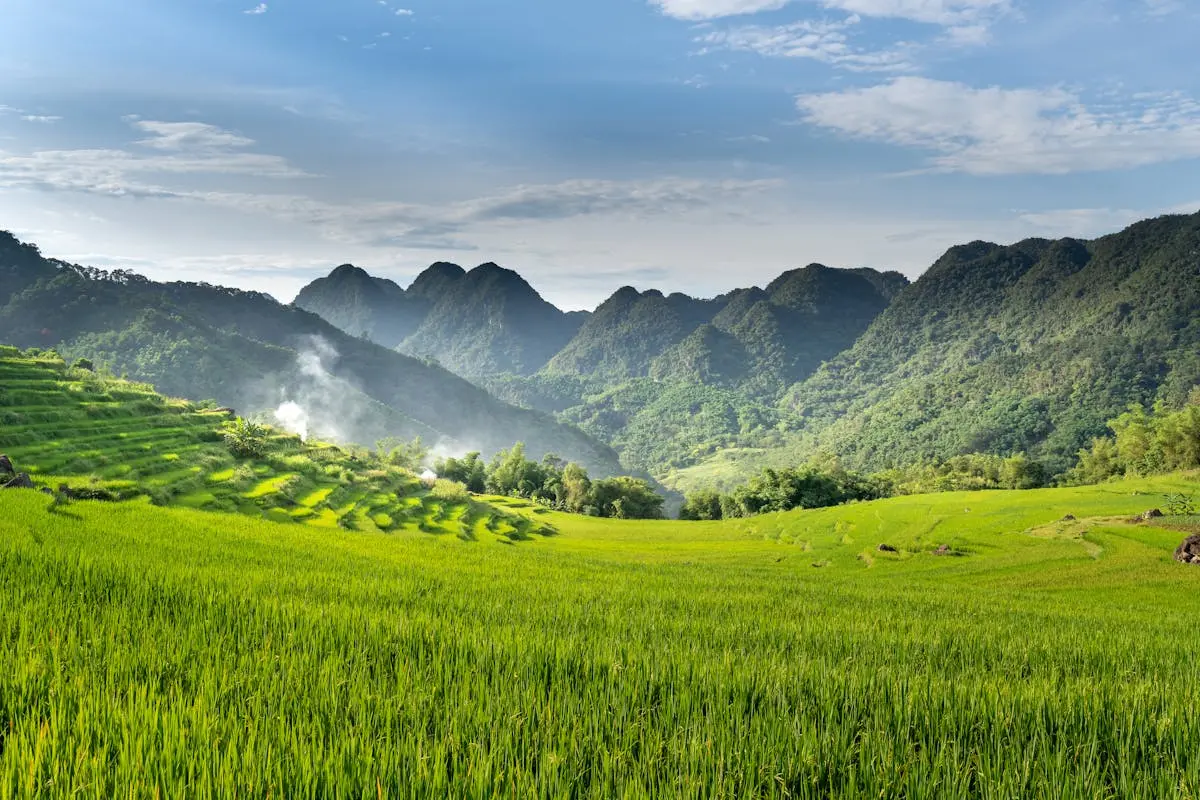
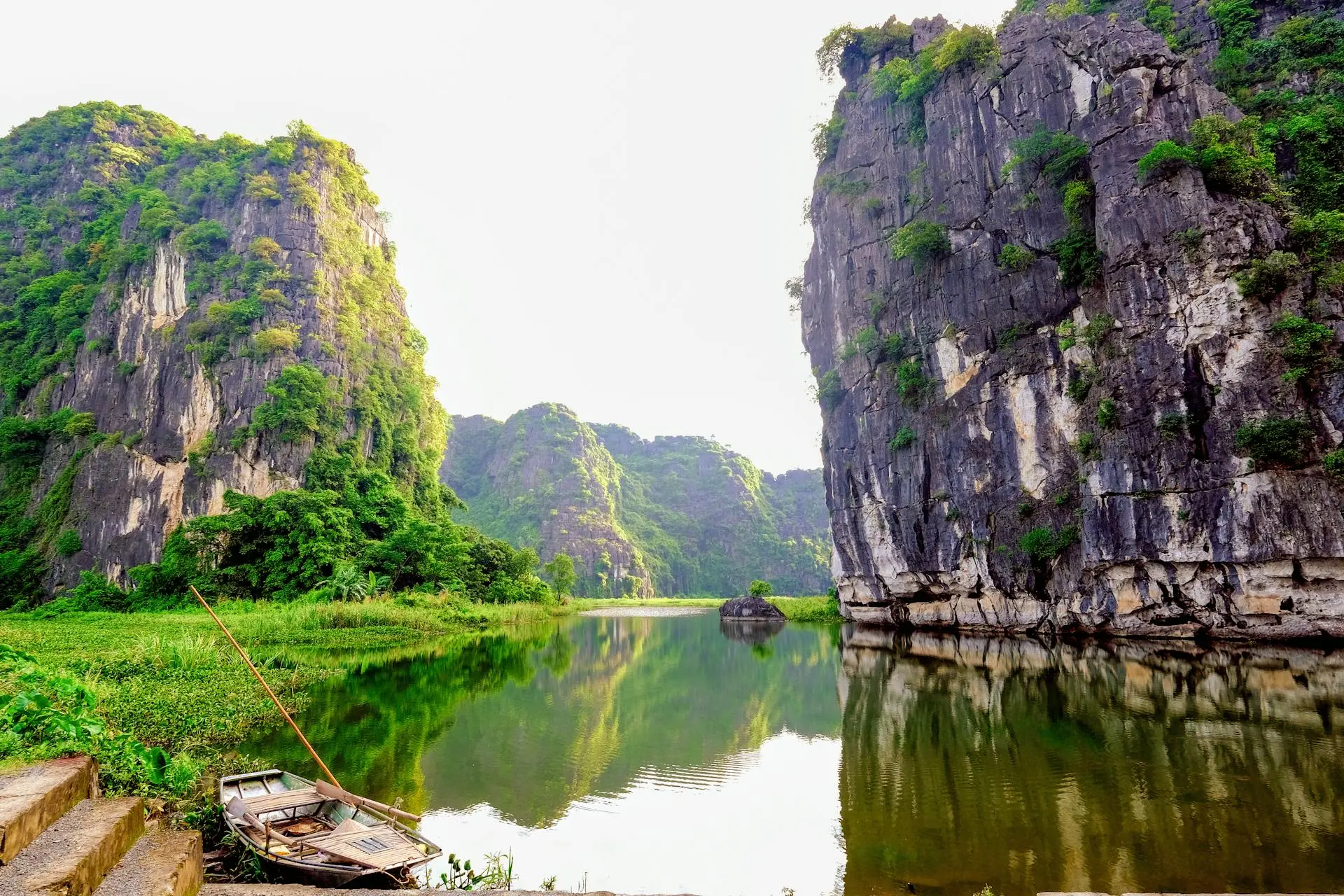
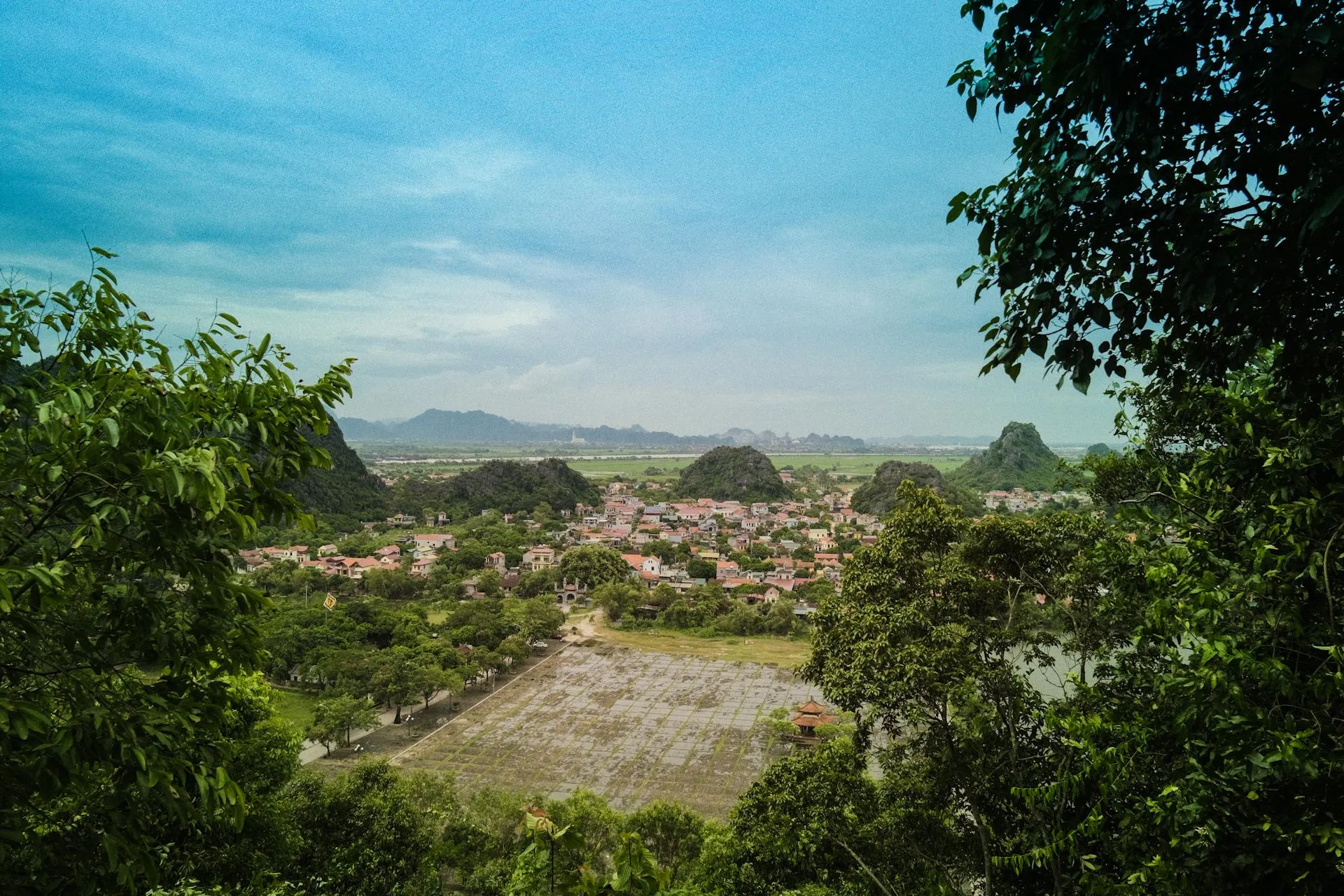
From the dragon lookout, the landscape unfolds in every direction. To the west, the Ngo Dong River winds through the rice paddies of Tam Coc, visible in its entirety from this elevation. The three caves that give Tam Coc its name can be identified as darker gaps in the karst walls where the river disappears underground. The rice paddies, depending on the season, form either a golden, green, or mirrored carpet stretching to the base of the surrounding peaks.
To the east, a different valley opens up, with less tourist traffic and a quieter, more remote feeling. Limestone towers stand in ranks like petrified sentinels, some partially wrapped in vegetation, others bare grey rock catching the light. On clear days, the view extends for several kilometres in every direction, and the scale of the karst landscape becomes apparent in a way that is impossible to grasp at ground level or from a boat on the river.
The quality of light at the summit varies dramatically with the time of day. In the late afternoon, the western-facing view catches golden hour light that transforms the rice paddies and limestone towers into something almost painterly. The shadows lengthen, the river catches the sun, and the colour temperature shifts from midday's harsh whites to warm golds and ambers. This is when the photographs that define Ninh Binh are taken — and it is when a private tour's flexibility matters most, because you can time your climb to arrive at the summit for precisely this light.
Five hundred steps, and then the world opens. Every other viewpoint I've visited in Vietnam is a footnote to this one.
A Brief History of Dance Cave
The cave at the base of Hang Mua mountain — the feature that technically gives the site its name — is a modest limestone grotto compared to the cathedral-scale caves at Trang An. According to local legend, during the Tran Dynasty (1225-1400 AD), kings would visit this cave to watch traditional dances performed by court entertainers. The word "mua" means "dance" in Vietnamese, hence "Hang Mua" — Dance Cave.
Whether the legend is historically verifiable is debatable, but it aligns with the broader pattern of royal and aristocratic use of the Hoa Lu karst landscape. The nearby Hoa Lu Ancient Capital served as Vietnam's imperial seat from 968 to 1010 AD, and the Tran Dynasty later used the karst terrain as a strategic retreat during the Mongol invasions. The cave is small and can be explored in a few minutes. A few stalactite formations and some decorative lighting are the main features. Most visitors treat it as a curiosity en route to the stairs rather than a destination in itself.
The Garden Complex
The base of Hang Mua has been developed into a garden complex that includes lotus ponds, stone pathways, topiaries, and several small ponds with koi fish. A cafe and souvenir shop sit near the entrance. The gardens are pleasant for a stroll before or after the climb, and the lotus ponds are particularly photogenic during the blooming season (June-August). The complex also includes a small hotel for overnight guests, though most visitors to Hang Mua come as part of a day trip from Hanoi.
Practical Tips for the Climb
Footwear matters. The stone steps can be slippery, particularly after rain or morning dew. Wear shoes with good grip — sandals and flip-flops are manageable but not recommended for the steeper sections. Bring at least one bottle of water; there are no vendors on the staircase itself. A small towel is useful for sweat and for wiping down the stone seats at the top.
If you are traveling between May and September, plan your climb for early morning or late afternoon to avoid the midday heat. The staircase is largely exposed to the sun, and temperatures above 35C make the ascent significantly more demanding. The climb itself takes 15-25 minutes at a moderate pace, with rest stops available at natural landings along the way. Allow 30-45 minutes at the summit for photographs, rest, and absorption of the view. The descent takes 10-15 minutes and is generally easier, though the steep sections require careful footing.
The entrance fee is 100,000 VND (approximately $4 USD). On our tours, all entrance fees are included and your guide will handle ticketing. The site is open from approximately 6:00 AM to 6:00 PM, though the gardens may close slightly earlier in winter months.
How to Visit Hang Mua on a Private Tour
Two of our private day tours from Hanoi include Hang Mua. The Ninh Binh Essentials ($99/person) pairs Mua Cave with the Tam Coc boat ride and Hoa Lu Ancient Capital. The Ninh Binh Panorama ($119/person) combines Mua Cave with Trang An UNESCO boat ride, cycling, and a gourmet lunch. Both tours include private transportation from your Hanoi hotel, an English-speaking guide, and all entrance fees.
The advantage of a private tour for Hang Mua is timing. Your guide knows the optimal time to begin the climb based on the day's conditions, and there is no group schedule forcing you to rush the summit or leave before the light is right. If you want to spend 45 minutes at the top waiting for a particular quality of light, you can. That kind of flexibility turns a good experience into an exceptional one.