The Original Ninh Binh Experience
Before Trang An received its UNESCO designation, before the tour buses found their routes from Hanoi, before Hollywood scouted filming locations among the karst towers — there was Tam Coc. Three caves along a slow river flanked by rice paddies, with nothing but the sound of oars breaking water and the distant call of birds from the cliff faces. Tam Coc was the first part of Hoa Lu (formerly Ninh Binh) to attract visitors, and it remains, in many ways, the most essential experience the region offers.
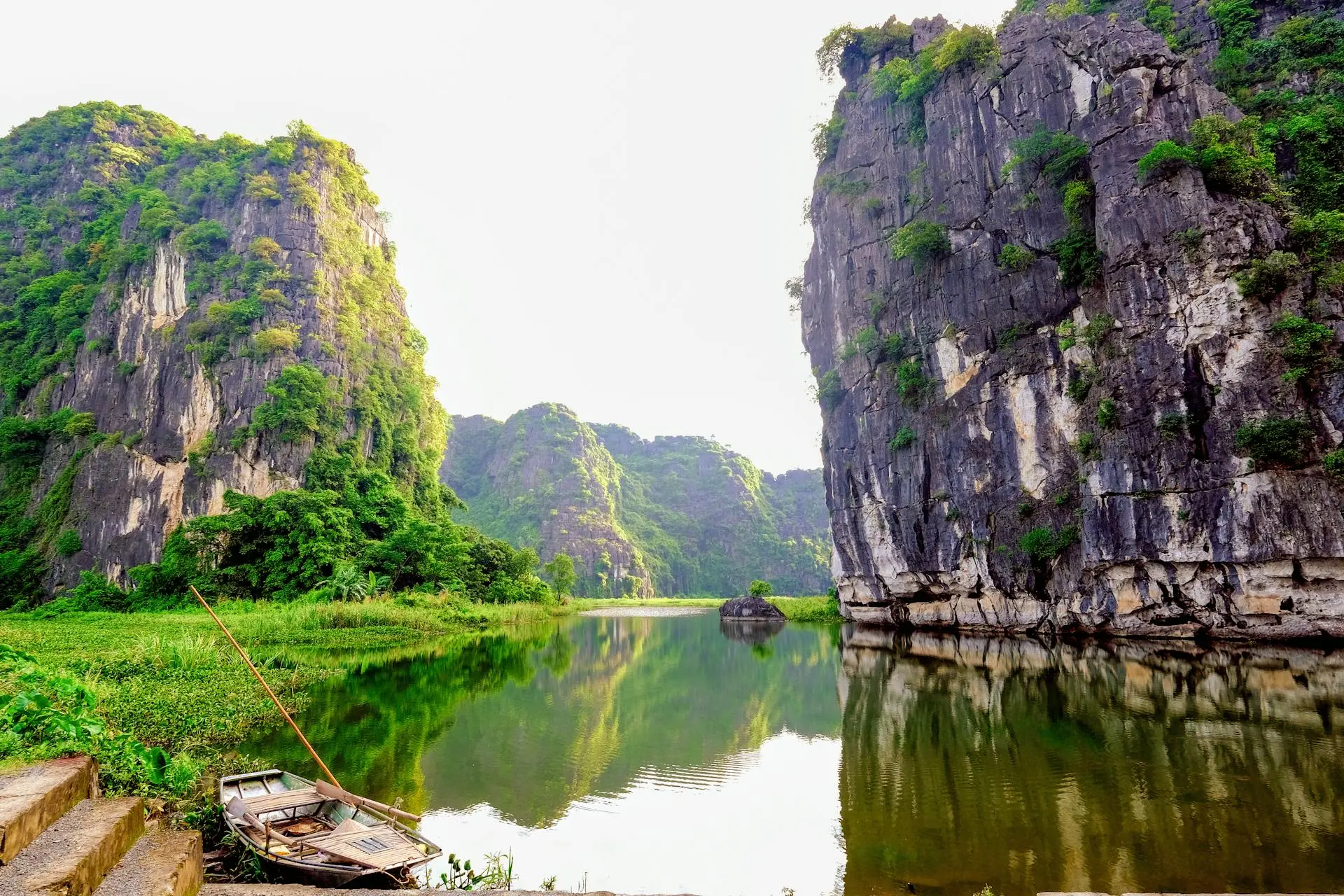
The name Tam Coc translates simply to "three caves" — Hang Ca (First Cave), Hang Hai (Second Cave), and Hang Ba (Third Cave). The Ngo Dong River threads through all three, creating a natural boat route that has been navigated by local fishermen and farmers for centuries. The caves are not deep or particularly complex in geological terms. Their power is in their setting: each cave mouth is framed by karst towers on both sides, and the passages between caves open onto views of flooded rice paddies stretching to the base of limestone mountains that look ancient enough to predate the idea of time itself.
The Boat Ride: What to Expect
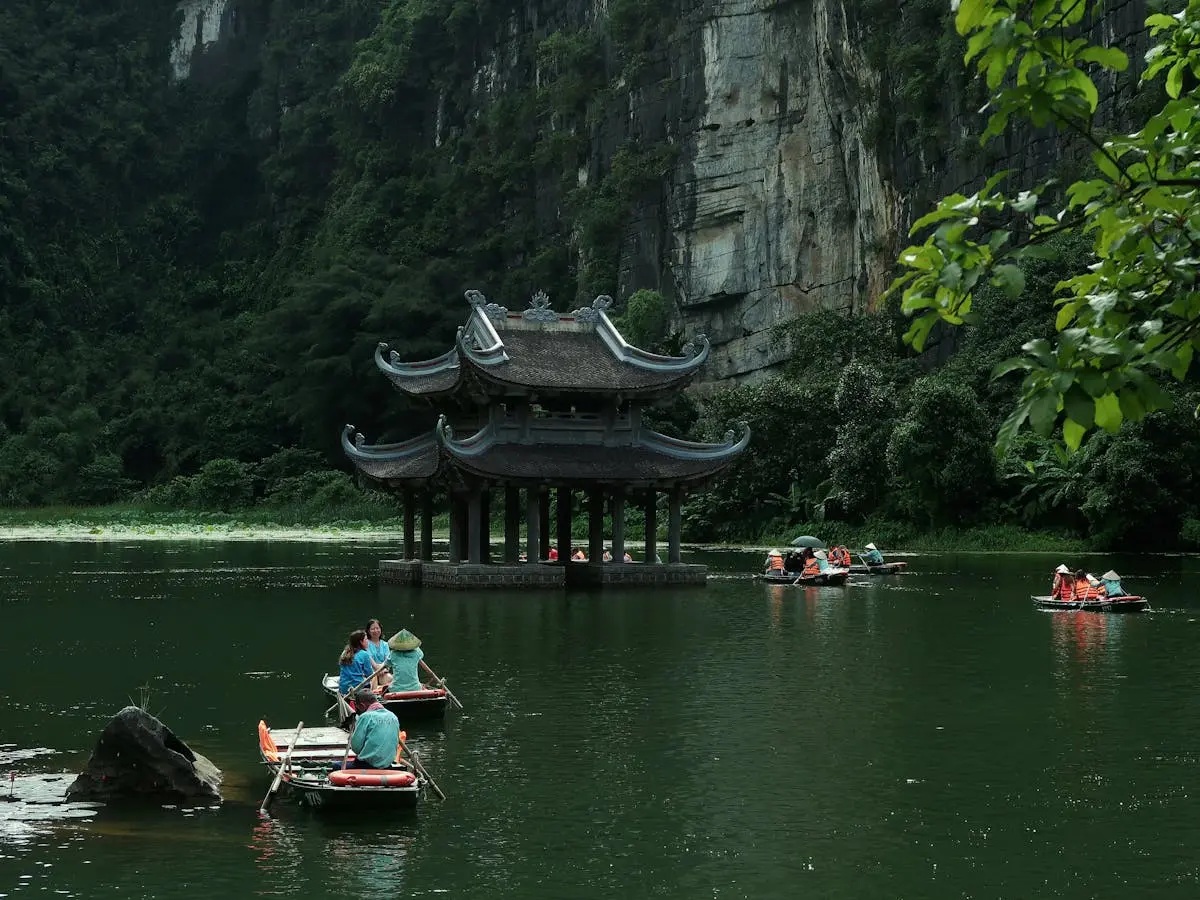
Boats depart from Van Lam Wharf, a small embarkation point on the south side of the Ngo Dong River. The metal rowing boats seat two to four passengers plus the rower, who sits at the stern and propels the boat with a distinctive foot-rowing technique unique to this region. The rower's feet work the oars while their hands remain free — a skill developed over generations of rice paddy and river work that is as practical as it is mesmerizing to watch.
The route follows the river south, through the first cave (Hang Ca, approximately 127 metres long), then through open stretches of rice paddies to the second cave (Hang Hai, approximately 70 metres), and finally through the third and longest cave (Hang Ba, approximately 125 metres). The outbound journey takes about 45 minutes at a natural rowing pace. The boat then turns and returns along the same route, offering the scenery from the opposite perspective — a detail that matters more than you might expect, because the light and shadows shift dramatically depending on the direction of travel.
Inside the caves, the ceiling drops low. At certain points, you may need to duck or lean back in the boat as the limestone roof passes overhead. The transition from the bright, open river to the cool darkness of the cave — and back out into dazzling light again — creates a sensory rhythm that becomes almost meditative over the course of the journey. The water inside the caves is shallow and strikingly clear, and the echo of the oars against the cave walls replaces all other sound.
The Rice Paddies: A Living Canvas
What distinguishes Tam Coc from other karst landscapes in Vietnam — and there are several — is the rice. The paddies that flank the Ngo Dong River are actively cultivated, and their appearance transforms dramatically with the seasons. In late September and October, the mature rice turns golden, creating a warm carpet of colour between the grey-green limestone towers. In May and June, the young rice stands bright emerald. In the planting season (February-March), the paddies are flooded mirrors reflecting the sky and peaks.
This agricultural cycle is not maintained for tourists. These are working paddies that feed families in the surrounding villages, and watching farmers tend them from a passing boat connects the visual spectacle to something real and ongoing. The landscape is beautiful because it is lived in, not preserved behind glass. The paths along the paddy edges are used by water buffalo, bicycles, and motorbikes carrying harvested rice, and if your boat passes during the harvest, you may see entire families cutting and bundling sheaves on the river bank.
The boat rower used her feet on the oars while birds circled above the caves. For two hours, the only agenda was the river.
Halong Bay on Land: The Comparison
Tam Coc is frequently called "Ha Long Bay on land" — a comparison that is geologically accurate if slightly misleading in terms of experience. Both landscapes feature karst towers rising from water: at Ha Long Bay, the towers emerge from the sea; at Tam Coc, they emerge from flooded rice paddies and river valleys. The geology is similar — both are products of limestone dissolution over millions of years — but the scale and atmosphere are quite different.
Ha Long Bay is vast, oceanic, and best experienced from the deck of a cruise ship. Tam Coc is intimate, agricultural, and best experienced from a rowing boat at eye level with the water. Ha Long Bay is about grandeur. Tam Coc is about closeness. The karst towers at Tam Coc feel close enough to touch — and occasionally they are. The river narrows at points to only a few metres wide, with vegetation overhanging from both sides, and the boat passes through the landscape rather than past it.
Beyond the Boat: Exploring the Tam Coc Area
The Tam Coc area extends well beyond the three caves. Within easy reach are several sites that reward exploration. Hang Mua Cave (also known as Mua Cave) sits approximately 2 kilometres from the Van Lam wharf, offering a 500-step climb to a dragon-shaped lookout that provides what many consider the single best panoramic view in all of Hoa Lu. From the summit, the Tam Coc river system is visible in its entirety — a ribbon of silver winding through the karst towers and rice paddies below.
Bich Dong Pagoda, a three-tiered pagoda built into a limestone cliff face approximately 2 kilometres west of Tam Coc, is a quiet and deeply atmospheric site. The lower pagoda sits at ground level; the middle and upper pagodas require climbing stone steps into the cliff itself. The views from the upper pagoda are excellent, and the entire complex sees far fewer visitors than the main boat ride. Thai Vi Temple, dedicated to the Tran Dynasty kings, is another nearby attraction accessible by boat or bicycle.
Cycling around the Tam Coc area is one of the best ways to experience the landscape at your own pace. Flat roads wind between rice paddies, through small villages with roadside stalls selling local fruit, and past limestone formations that appear and disappear behind bamboo groves. The area is small enough that you are unlikely to get genuinely lost, but large enough that an hour of cycling will take you through scenery that feels both remote and welcoming.
Practical Tips for Visiting Tam Coc
Arrive early. The Van Lam wharf opens at 7:00 AM, and boats departing before 8:30 AM enjoy noticeably fewer other boats on the river, better light for photography, and cooler temperatures. By 10:00 AM, the wharf is busy with group tour arrivals, and the river traffic intensifies. The return trip in late afternoon (departing around 3:30-4:00 PM) is another window of relative calm.
Sun protection is essential. The boat offers no shade, and the reflection off the water intensifies sun exposure. Wear a hat, apply sunscreen generously, and consider light long-sleeved clothing. Bring water — the ride is 1.5 to 2 hours, and the heat between May and September is substantial. A small dry bag or waterproof phone case protects electronics from splash.
Tipping the boat rower is customary and appreciated. A reasonable tip is 50,000 to 100,000 VND ($2-4 USD) per person. On our Essentials tour, your guide handles all logistics including boat arrangements and tip guidance, so you can focus entirely on the experience.
How to Visit Tam Coc on a Private Tour
Our Ninh Binh Essentials tour ($99/person) features Tam Coc as its centerpiece, combined with Hoa Lu Ancient Capital and Hang Mua Cave. It includes a private car from Hanoi, an English-speaking guide, the Tam Coc boat ride, a traditional Vietnamese lunch, and all entrance fees. For most travelers, this is the ideal introduction to the region — the places most visitors want to see, delivered without compromise on comfort or quality.